


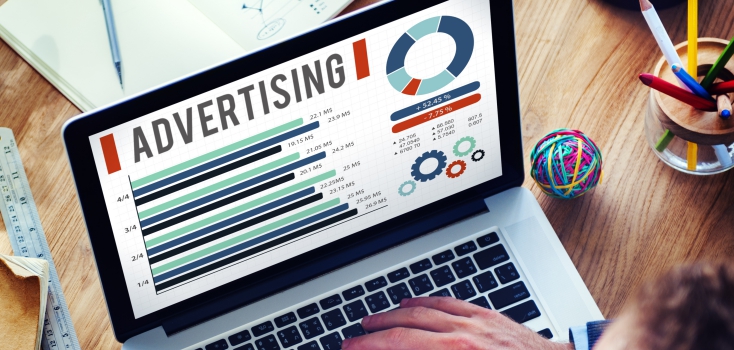
Marketing is a critical aspect of business management that encompasses strategies and tactics aimed at building relationships with customers. It involves creating brand awareness through well-planned and executed initiatives. Advertising, which is a part of marketing, involves using various forms of communication to persuade a target audience to take specific actions, such as purchasing a product or service.
With over 4 billion Internet users worldwide and counting, ignoring digital channels in marketing is a missed opportunity. The Internet provides direct access to a vast global audience and multiple channels for advertising, giving marketers the flexibility to reach their target audiences in various ways and at different budgets. This is why a marketing strategy that doesn’t consider digital channels is considered incomplete in today’s digital age.

What Tool can I use to Increase my Online Presence?
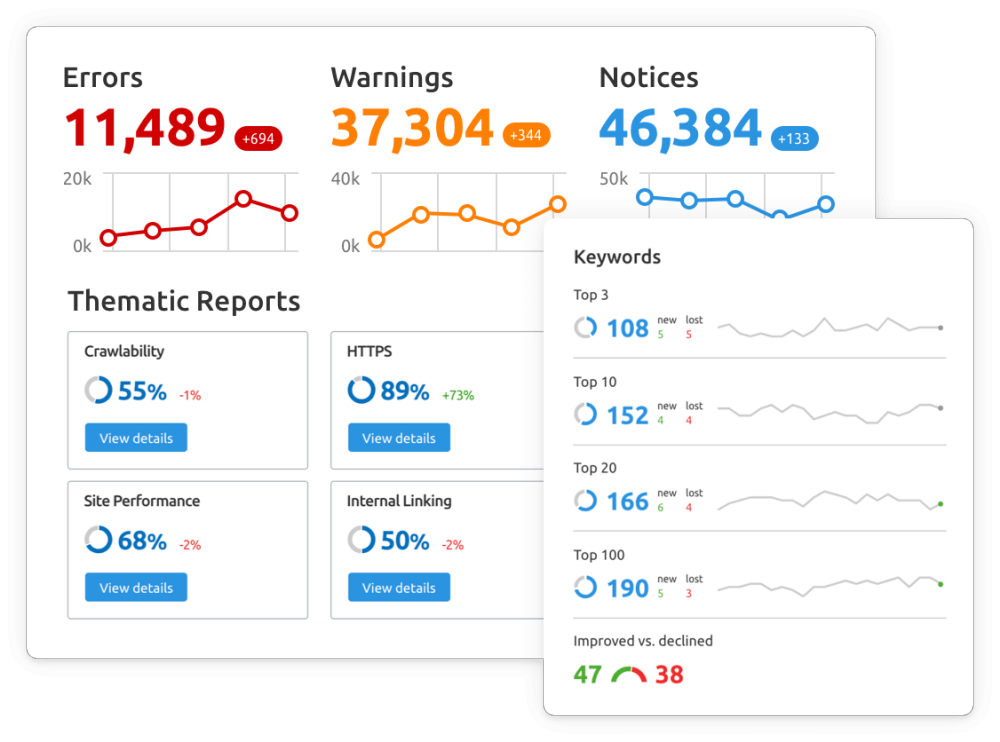
SEMrush is an online marketing toolkit that helps users efficiently facilitate strategic planning and understand what is happening in their niche and market. It is a research and business intelligence software that provides data and analysis on paid and organic search, social media, mobile data, and link-building activities worldwide. In short, it is an all-in-one application that provides customers with valuable data to gather a deep understanding of competition and market trends, help them develop a content strategy, and enable them to conduct website analysis.
What is Paid Search Advertising?
All search engines (ex., Google, Bing, Yahoo!, Yandex, Ask.com, etc.) have their own paid advertising. Businesses of any size can use and benefit from paid search ads. Pay-per-click, or PPC, involves bidding on keywords and placing ads at the top or sides of search results.
To better understand paid search advertising, we must first understand the search engine results page (SERP). When we type something in a search engine (ex., Google), it responds with a list of web pages that are relevant to the words we typed. This page is the SERP. A big part of that list comprises web pages that Google’s algorithm determined to be the best match for our search. This is also called organic results.
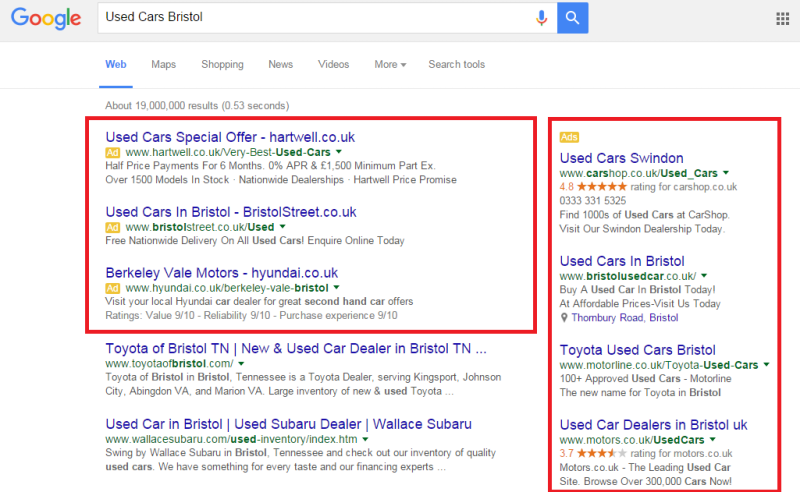
However, we can also see results that appear at the top and sides of the SERP. These are paid search ads, which look similar to the organic results or listings, except they are labeled as ads or Ads. Paid ads or PPCs are powerful because they give the advertisements a prime spot in front of people already searching for the same topics.
What is Social Media Advertising?
Social media advertising is simply serving advertisements to users on social media platforms. The number of social media users worldwide in 2019, according to Statista, is about 2.77B. By 2021, it will be about 3.02 billion. That is why social media platforms offer the option to sponsor or boost posts. Ads placed on their platform puts the company’s message in front of their target audience. They can easily encourage users to engage, click through, and buy. It is also noticeable that social media sites are now prioritizing ad space over organic content to help them bring in more revenue.
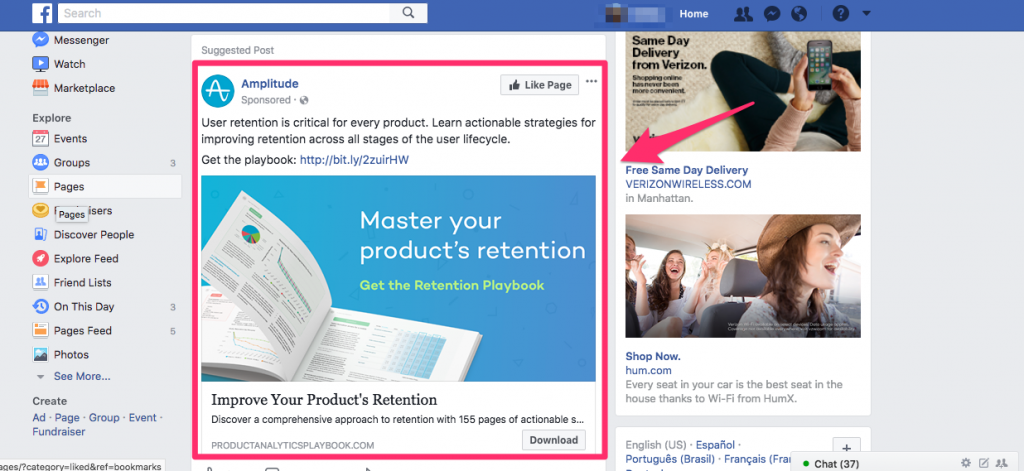
The good news is that any business or brand can benefit from social media advertising. With the growing number of social media users worldwide, it can be the only channel consistently bringing sales from day one. It serves a double purpose of advertising products or services, as well as promoting the social media page to grow its following. Facebook, Instagram, LinkedIn, and Twitter each have their version of ads placed on their page. For instance, Facebook has different types of ads, from simple Marketplace Ads to Page Post Ads, Sponsored Stories, and Promoted Posts.
What are Native Ads and Sponsored Content?
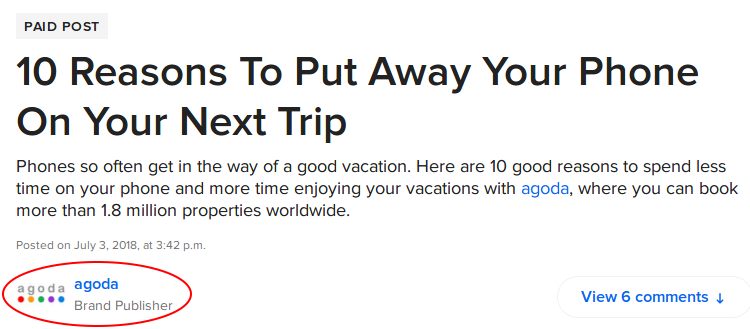
Sponsored content and native advertising are examples of paid media strategies. They are made to fit the form and function of the surrounding editorial content on a webpage. Thus, it appears “native” to the page. The main difference is that native advertising is more like a traditional ad, while sponsored content is more like a media placement.
Native ads contain a headline and description to encourage users to click on the link. Users are then led to an article on a brand’s website or other sponsored content. Sponsored content is a piece of brand journalism that lives on a publisher’s website. It’s usually written by the publisher’s staff, so the article matches the tone and voice of the rest of their content. Sponsored content is a great way to promote a brand in content the audience is already familiar with. Each type serves a different purpose and will be most effective depending on what the brand hopes to achieve.
What are Banner and Display Ads?
Display advertising is usually defined by banner ads, graphical or text, that appear in specifically designated areas of a website or social media platform. The digital display comes in a variety of sizes, and forms, such as static images, GIF ads, or animated HTML5 ads. Banner ads usually appear as horizontal boxes on top of a web page. Display ads are usually smaller and shown on the side.
Usually, there are three main types of display advertising based on the role they fulfill. They are 1) retargeting, 2) acquisition and 3) brand awareness. The main goal of a retargeting campaign is to get customers to re-engage with the company’s products. The goal of an acquisition campaign is to acquire new customers. It is also the most difficult of all because of adblockers, the habit of online users to ignore banner ads, the cost, and others. Brand awareness through display ads focuses on reaching as many relevant people as possible and influencing them to get interested in one’s brand rather than completing a sale.
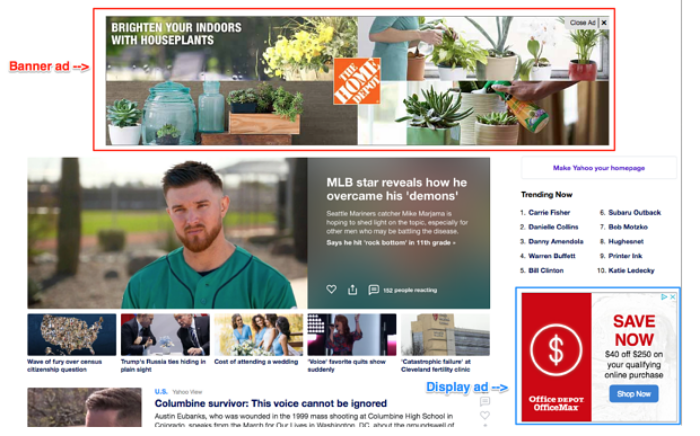
However, in recent years, native ads have become more popular. According to a study, they are viewed 52 percent more than display ads, contributing to higher brand lift. Also, native ads spending is increasing, at 56 percent share of online ads in 2016 in the US. Spending is projected to reach 74 percent by 2021.
Conclusion
The advantages of online advertising are numerous. Business owners can target their desired customers by putting ads where their target market spends its time. For small business owners whose every dollar counts, online advertising allows them to set a specific budget. Another advantage is that online ads allow tracking from start to finish, informing them how many times their ads were placed, how many people saw it, how many times the ad was opened, and more. Business owners can even take two different ad strategies and compare results (A/B testing).
